Key Takeaways
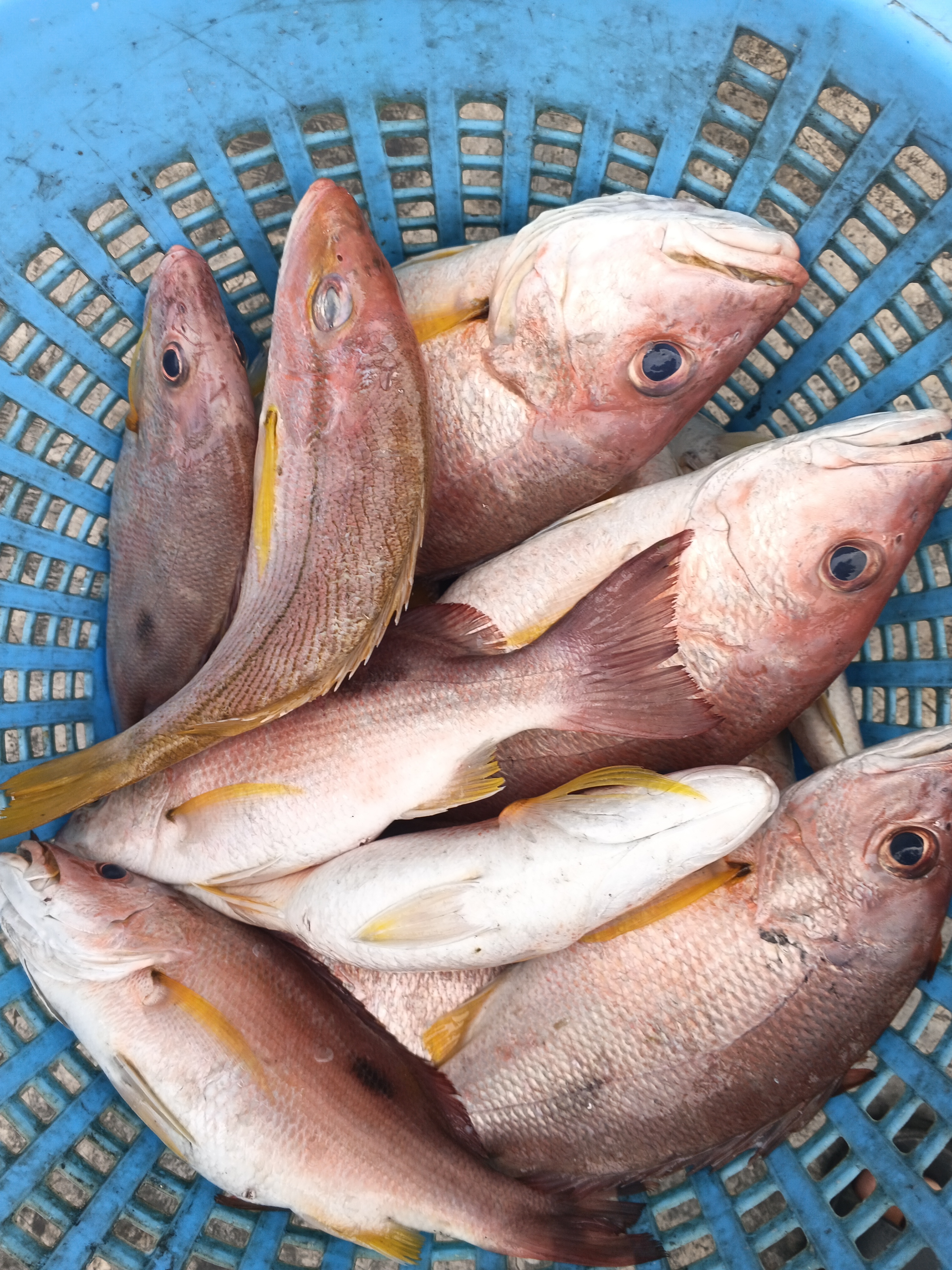
Sourced a 12kg Snapper from off the coast of Prachuap Khiri Khan.
After landing, it was purchased at the port and quickly transported to the processing facility.
After filleting, it was vacuum-sealed and flash-frozen at -30 to -60°C.
The condition of the fish was assessed by the fattiness of the belly and the firmness of the flesh.
Landing off the Coast of Prachuap Khiri Khan
This morning, Snapper was landed off the coast of Prachuap Khiri Khan. The individual we sourced weighed 12kg. We visually inspected the fish upon its arrival at the port. The belly showed significant fat content. The flesh was firm and the fibers were fine-grained. This condition confirmed our decision to purchase it.
Prachuap Khiri Khan is a town about a 20-minute drive from Hua Hin. Fish caught in this region reach us on the same day.
Purchase and Transport at the Port
The landed fish were iced on the boat. After a final check of the fish's condition at the port, we completed the purchase. Following the purchase, we transported it quickly to the processing facility. We paid close attention to maintaining the cold chain to minimize temperature fluctuations during transport.
Transport from the port to the processing facility is targeted to be within 10 minutes after purchase. This is a crucial factor in preserving the freshness of the fish.
The Process Until It Reaches the Store
After landing, fishermen ice the fish on the boat. Arriving at the processing facility within 10 minutes of purchase at the port, it is processed into sashimi fillets, vacuum-sealed, and then flash-frozen.
Processing and Flash Freezing
Upon arrival at the processing facility, filleting began immediately. Processing was carried out swiftly to maintain the quality of the flesh. Once filleted, each piece was vacuum-sealed. Subsequently, it underwent rapid freezing in a flash freezer at -30°C to -60°C. This process preserves the freshness of the fish.
Flash freezing minimizes damage to the fish's cellular structure. This prevents the fish from becoming watery upon thawing.
Maintaining Storage Temperature
Frozen fish are stored in an environment of -30°C to -60°C. Maintaining this temperature range allows for long-term quality preservation. The decision on when to consume it is left to the recipient.
Storage temperature records are checked regularly. This is a fundamental aspect of quality control.
My Perspective
When handling fish in Prachuap Khiri Khan, record-keeping is indispensable. For the Snapper sourced this time, we recorded the entire process from landing to processing and freezing. We believe these records build trust.
All information obtained from the site is recorded. This is the foundation of our work. Inventory can be checked in our online shop.