✍️ KO
Key Takeaways
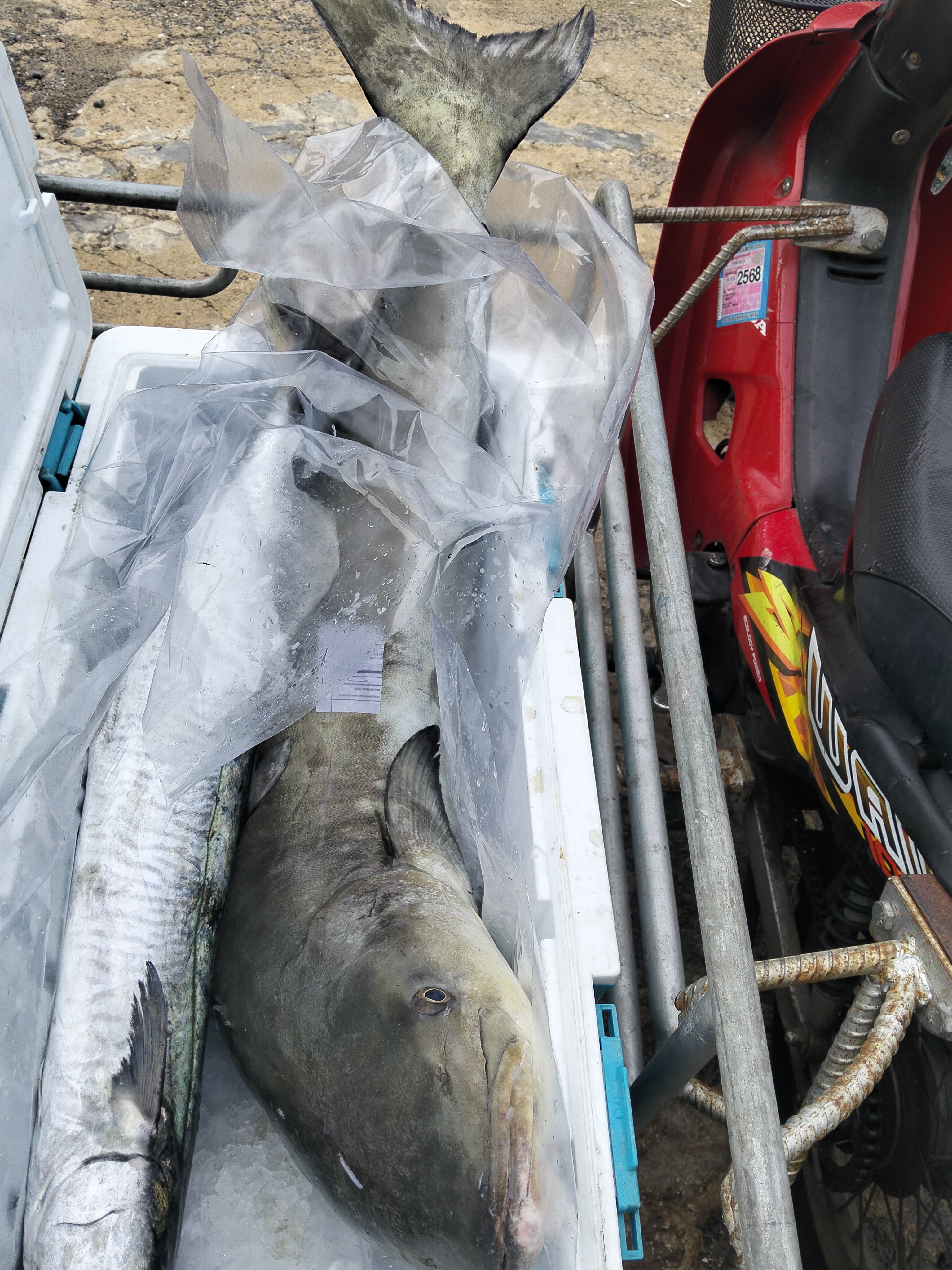
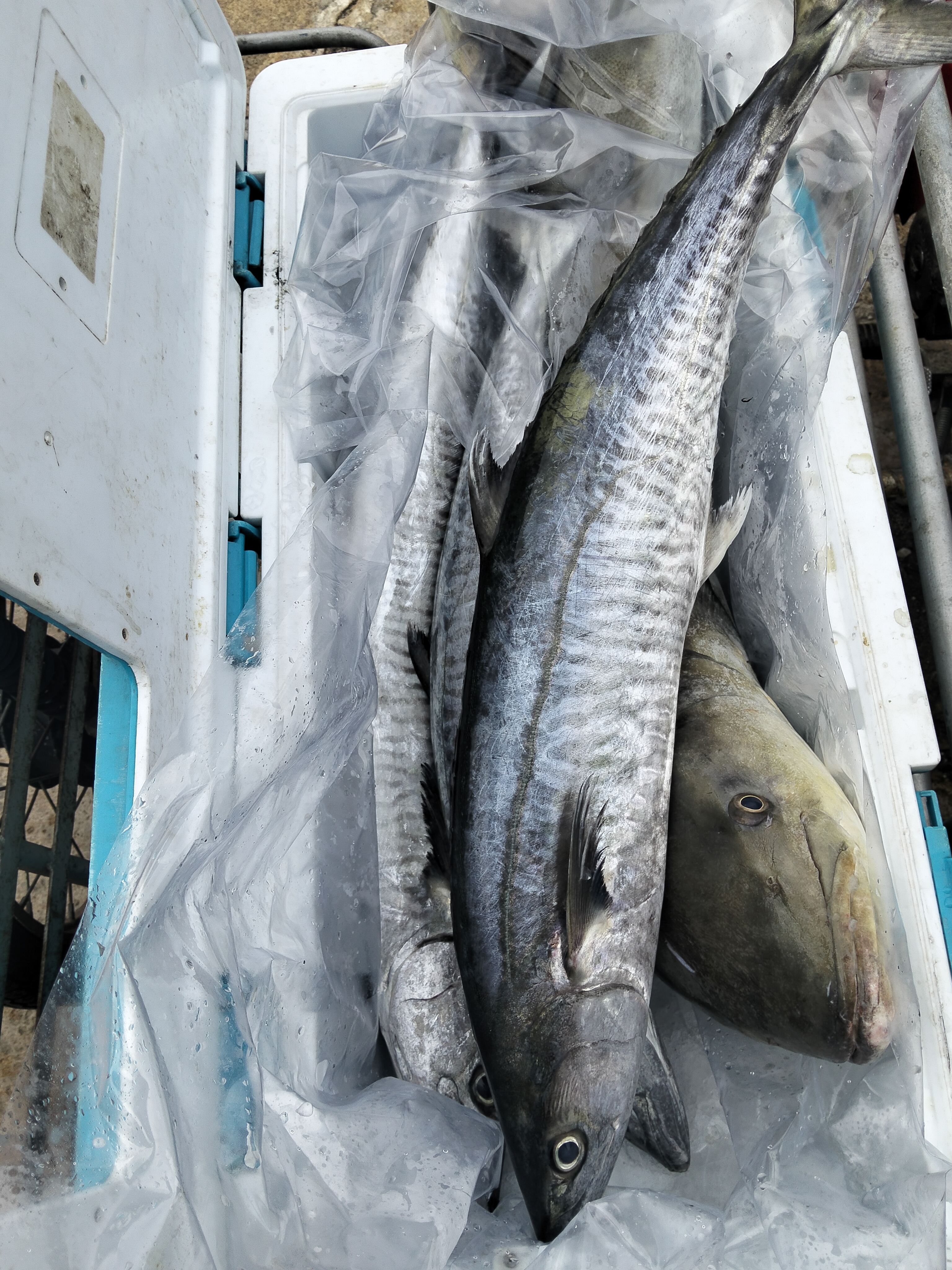
Sourced 19.5kg of Kuro Kampachi and 9.9kg of Yellowtail Amberjack from off Plumbtree.
After landing, purchased quickly at the port and transported to the processing plant.
Processed into sashimi fillets, vacuum-sealed, and flash-frozen.
Today's Procurement: Kuro Kampachi and Yellowtail Amberjack
Today, I will report on the fish landed off Plumbtree. First, a 19.5kg Kuro Kampachi. Then, a 9.9kg Yellowtail Amberjack. Both are wild-caught fish from the Gulf of Thailand. Upon arrival at the port, I inspected the condition of the fish.
(≖ ͜ʖ≖)✨
Inspection and Purchase at the Port
Fish that arrive at the port are first inspected on the same day. The condition of this Kuro Kampachi and Yellowtail Amberjack was also checked at the port. Their weights were 19.5kg and 9.9kg respectively. After purchase, they are promptly transported to the processing plant. This entire process is crucial for maintaining the quality of the fish.
Recording the condition of the fish on-site is part of my job. The photos serve as records.
Flow from Landing to Arrival at the Store
After landing, fishermen ice the fish on board. After purchasing at the port, they arrive at the processing plant within 10 minutes. They are processed into sashimi fillets, vacuum-sealed, and then flash-frozen in a blast freezer at -30℃ to -60℃. This process preserves the freshness of the fish.
After landing, fishermen ice the fish on board. Arrive at the processing plant within 10 minutes of purchase at the port, processed into sashimi fillets, vacuum-sealed, and then flash-frozen.
Processing: Fillet Processing and Hygiene Management
At the processing plant, I meticulously adhere to the cutting skills and hygiene management taught by the chairman. The Kuro Kampachi and Yellowtail Amberjack were processed into sashimi fillets. The work is carried out carefully while checking the texture and color of the flesh. Not only the cutting boards and knives, but also the cleaning of the work area are never neglected.
Hygiene management is a fundamental principle ingrained in me by the chairman. I strive daily to faithfully replicate the chairman's techniques.
(•̀_•́)✨
Importance of Flash Freezing
The fillets, once processed, are immediately placed into vacuum packs. Then, they go into a blast freezer at -30℃ to -60℃. By rapidly freezing at this temperature range, damage to the fish cells is minimized, reducing drip upon thawing. This is the essence of the technique inherited from the chairman.
Constant attention is paid to temperature control in the freezer. The readings are confirmed with a thermometer.
KO (Processing & Procurement Staff)'s Perspective
Today's procurement consisted of Kuro Kampachi and Yellowtail Amberjack. Both were fish in good condition. My role is to process and freeze them without compromising quality, by applying the techniques taught by the chairman. I also want to accurately pass on these techniques to my juniors.
I take full responsibility from the selection of fish at the port to processing and freezing. I would be happy if even a small part of how these fish are delivered to you, the readers, could be conveyed.
( ͡° ͜ʖ ͡°)✨
The temperature of the freezer is always maintained at -30℃ to -60℃.